
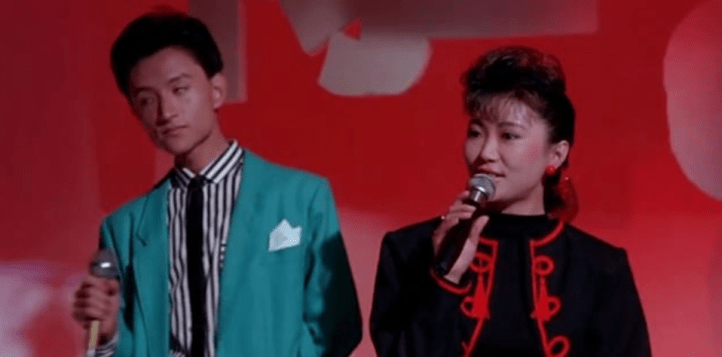
(1990, China)
This year, the lunar calendar falls on the rat, first of the repeating 12-year cycle of animals, and a sign of good fortune to those like myself, who have been branded by the primordial zodiac symbolizing determination, greed, and auspicious romance. It is said that your birth year, or běn mìng nián in Chinese, will grant you an array of riches . I thought I’d test these premonitions on the eve of the New Year by catching a $5 screening of a film of the same name Běn mìng nián (though its English title Black Snow, is the name of the novel by Liu Heng, which this film was adapted from).
I left the theater penniless, less in my pockets than in my psyche, or whatever faculty controls the feeling of hope, the certainty of desire—Black Snow rendered these sentiments utterly undesirable. In hindsight, I might have been greedy in anticipating fortune would simply find me in the coming year. But if the protagonist in the film, Li Huiquan, is a testament to anything, it is that even humility and kindness, in the face of political corruption, can strip you of all wealth.
Li is a semi-illiterate corpse getting along in society to the best of his ability. He is plagued by the terrors of his time in labor camp but determined to pave some path, however desolate. He is a kind, simple man; he often gives his day’s earnings to the first person to ask for help; he shies away from past vices; he refrains from advancing on a girl he falls in love with. We are aware of his humility, as well as the austerity of his days.
Black Snow was directed by “fourth-generation” filmmaker Xie Fei and premiered in 1990, a a little more than a decade after the social and political upheaval of the Cultural Revolution. This era was often depicted by Fei’s generation as bleak but nevertheless a symbol of hope and of continuance. He once assured an interviewer at the 40th Berlin International Film Festival that “…although society has a light and a dark, my characters still have hope to better their lives…to find love.” In Black Snow, however, the margin he leaves for this hope is so slim you almost have to imagine it. Ultimately, Xie subjects his protagonist to a devastating fate and we are left pondering if Li deserved it or, more ominously, that one’s reality might never reflect one’s merit. Xie asks: given these realities, how might you continue, virtuously?
 Code Unknown